Linen or Cotton for a Loose Summer Shirt?
Linen or cotton for a loose summer shirt comes down to hand, drape and creasing; learn what to notice across a week so your choice feels right.
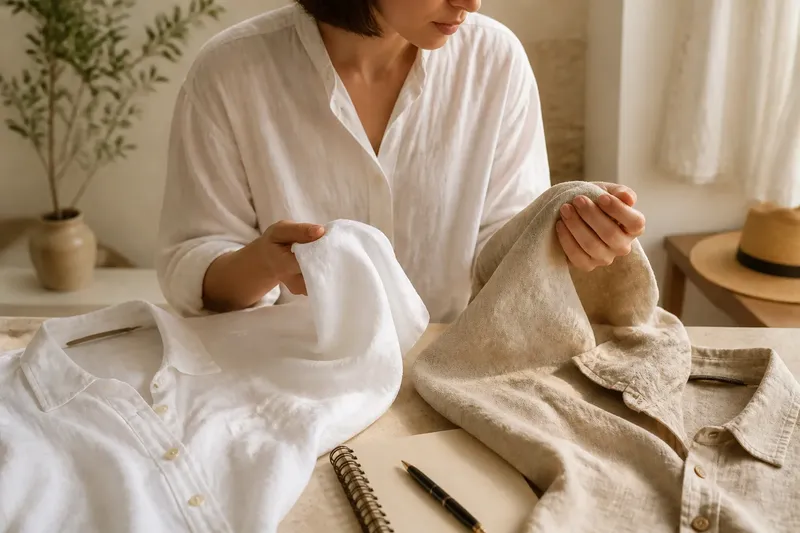
The common mistake with a loose summer shirt is choosing linen or cotton by fibre reputation alone, then discovering that the fabric’s feel and shape are not what you wanted. The better choice depends on the particular cloth: linen or cotton for a loose summer shirt is a question of hand, drape, creasing and how you like a garment to change through ordinary wear.
Begin with the feel you want close to your skin
“Hand” is the textile term for how fabric feels when touched: it may be crisp, smooth, dry, soft or slightly textured. Linen often has a distinct, dry touch and visible irregularities in its yarns, while cotton can feel smooth and even, though it also ranges from crisp poplin to brushed or loosely woven cloth.
These are tendencies, not rules. A fine linen shirt may feel supple, and a cotton shirt made from textured yarn can feel dry and airy. If shopping in person, handle the cloth rather than relying on the fibre name on a label. Notice whether you enjoy the surface against your forearm, and whether it softens when lightly scrunched in your palm.
For an online purchase, look closely at close-up photographs and read the fabric description for terms such as “washed”, “slub” or “poplin”. Slub describes small variations in yarn thickness; poplin usually refers to a closely woven fabric with a smooth, crisp surface. These words help you picture the cloth, but they cannot replace a clear view of its texture.
Use a week to notice the qualities that matter
A short routine can help separate what looks appealing in a product photograph from what feels comfortable in your daily life. You do not need a special test: pay attention to the fabrics you already like, and decide what you want a new shirt to do.
- At the start of the week: Choose a cotton shirt and a linen shirt you already own, borrow, or can handle in a shop. Note whether each feels cool, smooth, crisp, soft or textured when you first put it on.
- On a day you sit for a while: Check how the fabric falls across your lap and around the waist. A softer cotton may settle close to the body, while a more structured linen may keep a little space; weave and cut can alter either effect.
- After ordinary movement: Notice where folds appear at the elbows, back and hem. Ask whether the creases look relaxed to you or make the shirt feel untidy.
- Later in the day: Consider the cloth against your skin again. Does its texture still feel pleasant, or would you prefer a smoother surface or a looser, more open feel?
- At the end of the week: Write down the two qualities you cared about most. Use them to compare shirts, rather than trying to decide which fibre is universally better.
Say you wear a loose shirt for errands and then sit at a café; imagine that you notice the linen sleeves pick up visible bends, but enjoy their dry texture and easy, airy fall. The useful result of this imagined check is a clearer preference: if those creases feel like part of the look, linen may suit you; if you would rather have a smoother appearance, consider cotton with a soft but stable drape.
Choose by drape as well as fibre
Drape describes how fabric hangs and moves. A shirt with fluid drape follows the body more closely; one with body or structure stands away from it and holds a clearer outline. Fibre matters, but so do yarn, weave, fabric weight and finishing.
Linen commonly has enough body to create a relaxed shape with a little definition, especially in a loose cut. Cotton can be light and fluid or firm and crisp: a soft cotton voile hangs differently from a densely woven cotton shirt cloth. When comparing shirts, look at the shoulder, side seam and hem. Does the fabric fall in a long line, billow gently, or make a more defined shape?
Cut is part of the decision, too. Extra width can make a crisp fabric feel airy, while a softer fabric may fall closer to the body even in a generous size. If you like the outline of a shirt but not the way it hangs, try a different cloth or cut before ruling out the fibre.
How much creasing feels comfortable?
Both fibres crease. Linen is often associated with prominent, irregular creases, while cotton’s creases vary with its weave and finish: some cotton shirts keep a tidy surface, and others develop clear folds. A loose fit can make creasing more visible where fabric gathers, including at the elbow, under the arm and near the waist.
Think of creasing as part of the shirt’s appearance rather than a simple flaw. If you like a lived-in look, linen’s folds may contribute to the effect you want. If you prefer a smoother finish, a crisp cotton or a cotton fabric with a more stable surface may feel easier to wear. Neither choice removes the need to check care instructions before washing or pressing.
Which shirt suits your usual day?
For a day spent moving between indoor and outdoor settings, decide whether you prefer a dry, textured hand or a smoother one, and whether you welcome visible folds. For a shirt you want to wear repeatedly with different outfits, consider which surface and shape feel most natural alongside the clothes you already reach for.
Try to compare similar garments where possible. A very light linen and a heavier cotton are difficult to judge fairly because their fabric weight can influence both feel and drape. Compare shirts of a similar looseness, and notice how the collar, sleeves and hem behave as well as the cloth itself.
What should you check before choosing?
Does linen always feel rough?
No. Linen varies in yarn and finish, so some cloth feels crisp or textured while other linen feels softer. If touch matters to you, handle the shirt or seek close-up details rather than assuming every linen has the same surface.
Is cotton always smoother than linen?
No. Cotton can have a textured weave, and linen can feel quite supple. Compare the actual cloth and look for details about its weave or finish when a product description provides them.
Which fabric hangs more loosely?
There is no dependable answer from fibre alone. A fine, soft cotton may flow, while a structured cotton may stand away from the body; linen’s drape also changes with its construction and finish.
Can I avoid creases by choosing cotton?
Not necessarily, because cotton creases too. If a smooth appearance matters, consider the fabric’s weave and finish, and decide whether the expected level of creasing suits how you want to wear the shirt.
Let your preferred texture make the final decision
When you weigh linen or cotton for a loose summer shirt, give the greatest weight to the qualities you will notice while wearing it: the touch against your skin, the way it hangs and whether its creases feel pleasing or distracting. Fibre names offer a starting point, but the cloth and cut determine the experience. Choose the shirt whose hand and movement you would be glad to live with through an ordinary day.