A Quiet Wardrobe Reset Before a Long Weekend
A quiet wardrobe reset for a long weekend helps you choose clothes with compatible shapes, layers and colours, so familiar pieces form outfits for each setting.

The common mistake in a quiet wardrobe reset for a long weekend is choosing complete outfits one at a time, then adding garments for every imagined change of plan. That can leave you with clothes that compete rather than combine. Start by noticing how cut, fabric, colour and layers work together across the settings you expect to encounter.
This is a way to read your wardrobe, not a challenge to own or select as little as possible. Imagine an invented situation: Mara is preparing for a long weekend with a train journey, a family lunch, a walk along a breezy waterfront and an evening indoors. Her starting point is an open wardrobe and a growing pile of clothes chosen as separate outfits.
Read each setting for its clothing demands
Mara writes down the settings in order, then notes what each asks of her clothes: comfort while seated, freedom to walk, protection from wind, or a more polished appearance at lunch. This makes the wardrobe choices more specific than a broad label such as “sightseeing”. It also helps her see when one garment can work across more than one setting.
For instance, the waterfront suggests a coat with enough coverage for an exposed walk, while the family meal calls for a top whose fabric and finish feel considered without being delicate. A train carriage and a warm room may both call for a layer that can be removed easily. These observations connect the setting to construction and wear, rather than treating every occasion as a separate outfit.
Pay attention to the transitions as well as the destinations. A shirt that sits smoothly beneath a jumper can adapt to changing warmth, while sleeves that bunch under a knit may make the same combination uncomfortable. The way garments fit together is part of their usefulness.
Choose garments that work as a visual set
Mara begins with comfortable trousers, then looks for tops that suit their shape, colour and level of formality. A soft shirt may create a more composed line for lunch and still sit beneath a jumper; a simple T-shirt may look relaxed with the same trousers. She chooses a second bottom only if it changes the look or function in a meaningful way.
She considers fabric as well as appearance. A soft, flexible shirt can be easier to layer than a stiff one, and a jumper with sleeves that lie flat over the shirt is more comfortable than one that pulls or gathers. A coat should sit over the planned combinations without restricting movement.
Use this set of checks to decide whether each candidate garment contributes something distinct:
- Check the base combination: If the top and bottom allow comfortable sitting and walking, keep them as a dependable pairing; if either restricts movement, choose a familiar alternative.
- Check colour compatibility: If a top works with both selected bottoms, keep it as a flexible option; if it clashes with the rest of the set, replace it with a colour that connects more easily.
- Check the change of mood: If a shirt or accessory makes a meal look more polished without needing a separate outfit, keep it; if it adds no clear visual or practical difference, leave it out.
- Check the mid-layer fit: If the jumper sits smoothly over the chosen top, keep the pairing; if sleeves bunch or the neckline feels uncomfortable, choose a lighter or better-fitting layer.
- Check the outer layer: If the coat fits over the combinations and suits the exposed walk, keep it; if it limits movement or lacks the needed coverage, select a more suitable coat.
- Check the footwear against the clothes and route: If the shoes feel comfortable with the trousers and suit the expected surfaces, keep them; if not, choose footwear that better supports the day’s movement.
- Check each accessory’s role: If a scarf adds warmth or gives a familiar combination a more finished appearance, keep it; if it has no distinct use, leave it out.
Test the combinations before settling on them
Lay the candidate garments on a clear surface and try them together, including the layers. This lets you see whether colours sit well side by side, whether hems and proportions feel balanced, and whether the coat works over the outfit rather than only on its own. It is a simple way to judge the wardrobe as a set.
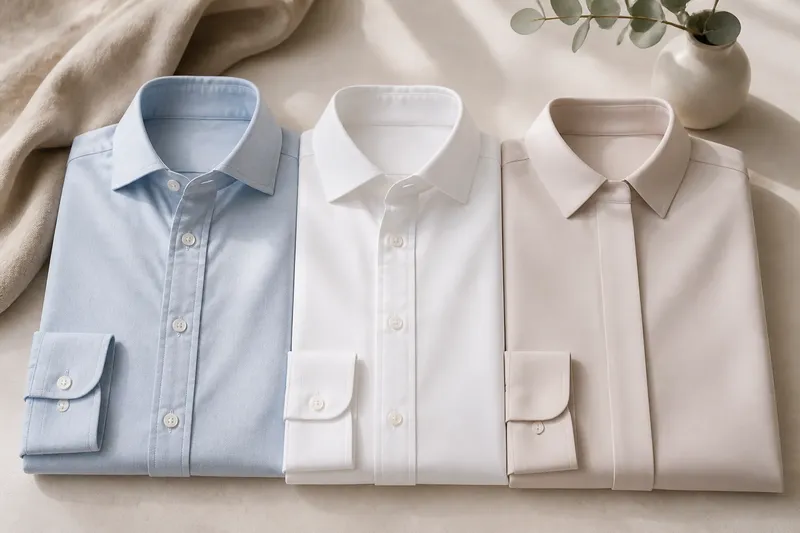
In Mara’s invented situation, she starts with charcoal trousers, a soft blue shirt, a white T-shirt, a grey jumper and a navy coat. She tries the shirt with the trousers for lunch, then puts the jumper over the shirt and checks whether the sleeves lie flat; they do, so she keeps that combination for the train. She pairs the T-shirt with the same trousers for the walk, then checks the coat over both outfits and finds it comfortable. A second jumper adds no distinct colour or silhouette, so she leaves it out.
The point is not to make every garment match in a narrow sense. A wardrobe can include contrast, but the contrast should look intentional: a crisp shirt with relaxed trousers, for example, can balance formality without requiring another outfit. If a piece only works with one other item and does not serve a particular setting, it may be less useful than a garment that connects several combinations.
Let personal comfort shape the silhouette
Clothes influence how relaxed or dressed an outfit feels through details such as fit, drape, neckline and layering. If you dislike a bulky knit indoors, a fine jumper or cardigan may suit you better. If you prefer a covered neckline, choose a base top that feels comfortable without relying on a scarf.
Mara likes having a soft layer available but dislikes sleeves that feel tight beneath a coat. She chooses a jumper with room over the shirt, then checks the full combination by reaching forward and walking around. The result is a set of layers she is more likely to wear, rather than an outfit that looks right only when she stands still.
Think about how one garment changes the character of another. A shirt collar can make a jumper look neater, while a T-shirt can make the same knit feel more casual. These small visual shifts help familiar pieces serve different settings without losing a coherent style.
Check fabric, fit and care before deciding
Before settling on the selection, sit, reach and walk in the combinations. Check that fastenings stay comfortable, hems do not catch, and sleeves do not pull when layered. If a garment feels awkward in the movement it is meant for, choose a better-fitting alternative.
Consider the care needs of the fabric, too. A delicate top may need more attention than a sturdy shirt, and some garments benefit from airing rather than frequent washing. Follow the care label and maker’s instructions; general advice should not override them.
Imagine Mara puts on the pale shirt beneath her jumper and notices that its sleeves bunch at the wrists. She swaps it for the familiar T-shirt, checks that the neckline still looks suitable with the jumper, and keeps the shirt for lunch on its own. The observable result is a more comfortable layered outfit while the shirt retains a clear role in the selection.
Which wardrobe choices make the set more coherent?
How do I choose colours that combine easily?
Start with a colour you already wear comfortably, then compare candidate tops and bottoms against it in daylight. Keep pieces that form combinations you like, and replace any item that repeatedly interrupts the set unless you want that contrast to be a deliberate feature.
How can I tell whether a layer fits properly?
Wear the base top, add the layer, then reach forward and raise your arms. If the sleeves bunch, the fabric pulls or the neckline becomes uncomfortable, try a different cut or a lighter layer.
Should every garment match every other garment?
No. A few useful pairings are enough, and contrast can make an outfit feel more distinctive. Keep a contrast when the proportions, colours or textures look intentional together; otherwise, choose a piece that connects more naturally with the rest.
What should I do with a garment that works only once?
Ask whether that one use matters enough to justify its place in the selection, such as a specific meal or activity. If it does, keep it; if it duplicates another garment’s role without adding a different look or comfort, leave it aside.
Use the final selection to clarify your style
Lay out the combinations that passed your checks and notice what they share: perhaps soft fabrics, clean lines, relaxed fits or a recurring colour. Those details can tell you more about your preferences than a pile of individual favourite pieces. If a garment feels out of place, decide whether its contrast is intentional or whether another item would make the set more coherent.
For your own quiet wardrobe reset, keep the setting list beside the clothes while you compare shapes, fabrics and layers. The phrase quiet wardrobe reset can mean more than editing a selection: it can help you recognise which combinations feel comfortable, look like you and adapt without forcing a garment into a role that does not suit it.